
Last Updated: October 30, 2026
Quick Summary
Construction project management is the planning, coordinating and controlling of a build from start to finish, with one manager acting as the single point of contact between you, designers, subcontractors and inspectors. In Irvine, it helps keep a renovation on schedule and within budget. Compare providers on scope, fee structure and permit handling before signing.
- Scope, schedule and budget oversight prevent disputes that often lead to change orders.
- Verify the CSLB license status and confirm insurance policies are in force with the carrier.
- Ask for three comparable projects from the last three years and call the named references.
- Fee structures include percentage of construction cost, flat fee, hourly and cost-plus with a cap.
- Ask each provider to break the fee into estimated hours by phase before comparing quotes.
Table of Contents
- What Construction Project Management Services Include
- Construction Project Manager vs General Contractor: Which Do You Need?
- Building a Construction Project Management Checklist
- Planning a Realistic Construction Project Schedule
- Understanding Construction Project Management Cost and How to Compare Quotes
- Requesting a Consultation for Your Irvine Project
- Frequently Asked Questions
Hiring a construction project manager in Irvine can keep a renovation on schedule and within budget, but only if you know what the role covers before you sign anything. This guide from level up construction explains the services, the cost structure and how to compare providers, so you can choose the right support for your project.
What Construction Project Management Services Include
Construction project management is the work of planning, coordinating and controlling a build from start to finish. A construction project manager acts as the single point of contact between you, the designers, the subcontractors and the inspectors. They keep the job moving.
In practice, the role covers several areas. Each one protects you from a different kind of loss.
Scope, Schedule, and Budget Oversight
A construction project manager defines the scope before work begins. That means writing down exactly what will be built, replaced or repaired, and who is responsible for each item.
Schedule and budget oversight follow from that scope. The manager sequences the trades, tracks progress against milestones and flags delays early. When a material arrives late or an inspection fails, the manager adjusts the plan rather than letting the project drift.
Permits, Inspections, and Code Requirements
Most kitchen and bathroom remodels require permits and plan review before work starts. A project manager tracks which permits apply, submits the paperwork and schedules each inspection at the right stage. Missing one can stop work and delay the schedule.
Code requirements affect plumbing, electrical and structural work, especially in older homes. Your project manager should know which items trigger a code review and plan for them early.
Construction Project Manager vs General Contractor: Which Do You Need?
A general contractor builds the project. A construction project manager plans, coordinates and oversees it, often on your behalf. The two roles overlap, and some contractors offer both.
Choose a dedicated project manager when you are remote, managing several properties or running a complex job with many trades. For guidance on picking the right contractor for a whole-house project, read how to choose a whole-house renovation contractor.
Building a Construction Project Management Checklist
A checklist is only useful if each item tells you how to verify it. The list below pairs every check with the evidence to request and the place to confirm it.
Verify Qualifications and Standing
- License status. Ask for the license number and verify it through the California Contractors State License Board (CSLB) license lookup (Check A License). Confirm the classification matches the work and that the license is active, not suspended or expired.
- Insurance. Request a current certificate of insurance showing general liability and workers’ compensation coverage, and confirm the certificate names you or your entity as additional insured where appropriate. Call the carrier to confirm the policy is in force, certificates can be issued against canceled policies.
- Bonding capacity. For larger projects, ask whether the firm can obtain a payment and performance bond and at what project size. A firm that cannot bond may still be qualified for smaller work, but you should know the limit before you sign.
Verify Experience and References
- Comparable projects. Ask for three projects in the last three years of similar type, size and complexity, not a portfolio of unrelated work.
- Named references you can call. Request contact information for the owner or owner’s representative on each project, and ask specifically about schedule performance, change-order frequency and how problems were communicated.
- Named project manager. Confirm in writing who will manage your project day to day, their direct phone number and email, and how their time is allocated across projects.
Verify the Commercial Terms
- Written scope of work with itemized deliverables and explicit exclusions.
- Permit and inspection plan stating who pulls each permit, who pays permit fees and who schedules inspections.
- Schedule with milestones and a stated contingency, plus the process for schedule recovery if a milestone slips.
Verify Local Compliance Knowledge
- Permit familiarity. Ask the provider to walk through a recent project in the City of Irvine and describe which permits were required, which agency reviewed the plans and how inspections were sequenced.
- Code and inspection triggers. Ask which scope items typically trigger additional plan review, structural alterations, electrical service changes, plumbing relocations and energy-code compliance are common examples.
- Records and closeout. Confirm the provider will deliver as-built drawings, warranty documents, inspection sign-offs and a closeout package at completion.
Score each provider against the same checklist and keep the completed sheets side by side. A provider that answers every item in writing is easier to hold to the scope later than one that answers verbally.
The last item matters most if you live outside the area. Ask how progress will be reported before work begins, and get the reporting format in writing.
Planning a Realistic Construction Project Schedule
Schedules slip most often at the start. Permit approval, material lead times and trade availability all affect the timeline. A realistic plan allows time for each of these before demolition starts.
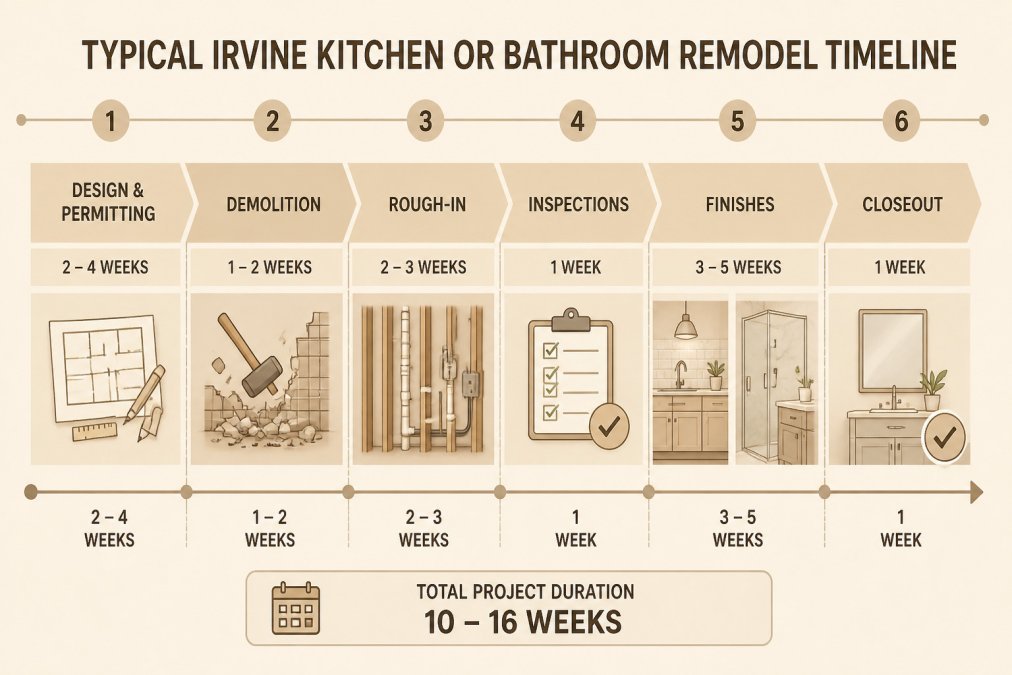
Timing depends on scope, permit timing and whether hidden conditions appear behind the walls.
Watch out: older homes can hide problems such as outdated wiring or water damage behind finished surfaces.
Understanding Construction Project Management Cost and How to Compare Quotes
Project management fees are usually quoted in one of four structures, and knowing which one you are looking at changes how you compare bids. Most practitioners use one of these:
- Percentage of construction cost. The manager’s fee is a set percentage of the hard construction budget. This aligns the manager’s incentive with total cost but can reward a larger scope.
- Flat fee. A fixed dollar amount for a defined scope. Predictable for you, but change orders and added scope usually trigger a fee adjustment.
- Hourly or time-and-materials. Billed for hours worked plus reimbursables. Common for consulting, owner’s-representative work or partial-scope oversight.
No single structure is cheapest. A flat fee can look lower than a percentage until the scope grows; a percentage can look higher until you compare what each provider actually includes. Ask every provider to quote in the same structure so the numbers are comparable.
What Drives the Fee Up or Down
Fee levels move with a handful of project-specific factors, not with the provider’s marketing:
- Scope complexity. A single-room remodel with one trade sequence costs less to manage than a multi-phase rehabilitation with structural, mechanical and envelope work.
- Number of trades and interfaces. Each additional subcontractor adds coordination, scheduling and quality-control time.
- Permit and inspection load. Projects that trigger multiple agency reviews, historic or coastal reviews, or phased inspections require more management hours.
How to Compare Quotes Without a Benchmark
Because fees are project-specific, the useful comparison is scope-behind-the-number, not the number alone. Put each quote through the same questions:
| Item to Compare | What to Ask |
|---|---|
| Scope of services | Which tasks are covered, and which are billed as extra? |
| Fee structure | Percentage, flat, hourly or cost-plus, and what triggers an adjustment? |
| Change orders | How are changes priced, documented and approved? |
| Permit handling | Who submits, who pays fees, and who manages inspections? |
| Reporting | What is the cadence, format and evidence (photos, logs, cost reports)? |
| Staffing | Is the named manager dedicated, or shared across projects? |
| Term and termination | What is the notice period, and how are unfinished deliverables handled? |
A lower quote can cost more if it excludes permit management, inspection coordination or change-order administration. Compare the line items each provider will actually perform, then compare the fee.
A Practical Way to Sanity-Check a Fee
Ask each provider to break the fee into estimated hours by phase, pre-construction, construction and closeout, and to state the assumed number of site visits and reporting cycles.
Request current pricing directly from level up construction or any other provider, and ask for the fee basis in writing before you sign. To see how renovation budgets are built, read how much a fix and flip renovation budget should be.
Requesting a Consultation for Your Irvine Project
If you are planning a remodel or rehabilitation in Irvine, start by describing your scope, timeline and budget. You can review the full range of construction project management services level up construction offers before you decide. When you are ready to talk through your project, contact our team to request a consultation.
Bring your scope list, any existing plans and your target timeline. A clear brief lets the team give you a useful assessment. Get A Quote to start the conversation about your Irvine project.
Frequently Asked Questions
What do construction project management services include?
Construction project management services cover the coordination that keeps a build on track: defining scope, building the schedule, managing contractors and subcontractors, tracking the budget and change orders, arranging permits and inspections, and handling quality control and closeout. For homeowners and remote property owners, the manager acts as the single point of contact on site, so decisions and documentation do not depend on being there in person. The exact services vary by provider, so ask for a written list of responsibilities before signing.
How much do construction project management services cost?
Pricing depends on project size, complexity, timeline, and how many hours of oversight the job requires. Some managers charge a percentage of total construction cost, others a flat fee or hourly rate. Level Up Construction has not published fixed rates here, so the most accurate figure comes from a written quote based on your scope. Ask every provider to itemize what the fee covers so you can compare quotes on equal terms.
Does a construction project manager handle permits and inspections?
In most cases a construction project manager coordinates permit applications, schedules required inspections, and confirms that work meets applicable building codes before it is covered up. Responsibility should be written into the contract so it is clear who submits drawings, who pays permit fees, and who resolves failed inspections. Ask for examples of recent permitting work on similar properties.
What should I ask before hiring a construction project management company?
Ask how they handle cost changes, who your day-to-day contact will be, how often you will receive schedule and budget updates, and how they verify contractor licensing and insurance. Request references from recent projects of similar size and age, and ask how they would handle a discovery such as hidden structural damage or asbestos in an older home. Clear answers to these questions reveal how the process will actually run.
